King Ranch Connection
An intimate character analysis of Richard and Henrietta King and how they came together to build a lifegiving legacy that saved the lives of my Dogface battalion over a hundred years later.
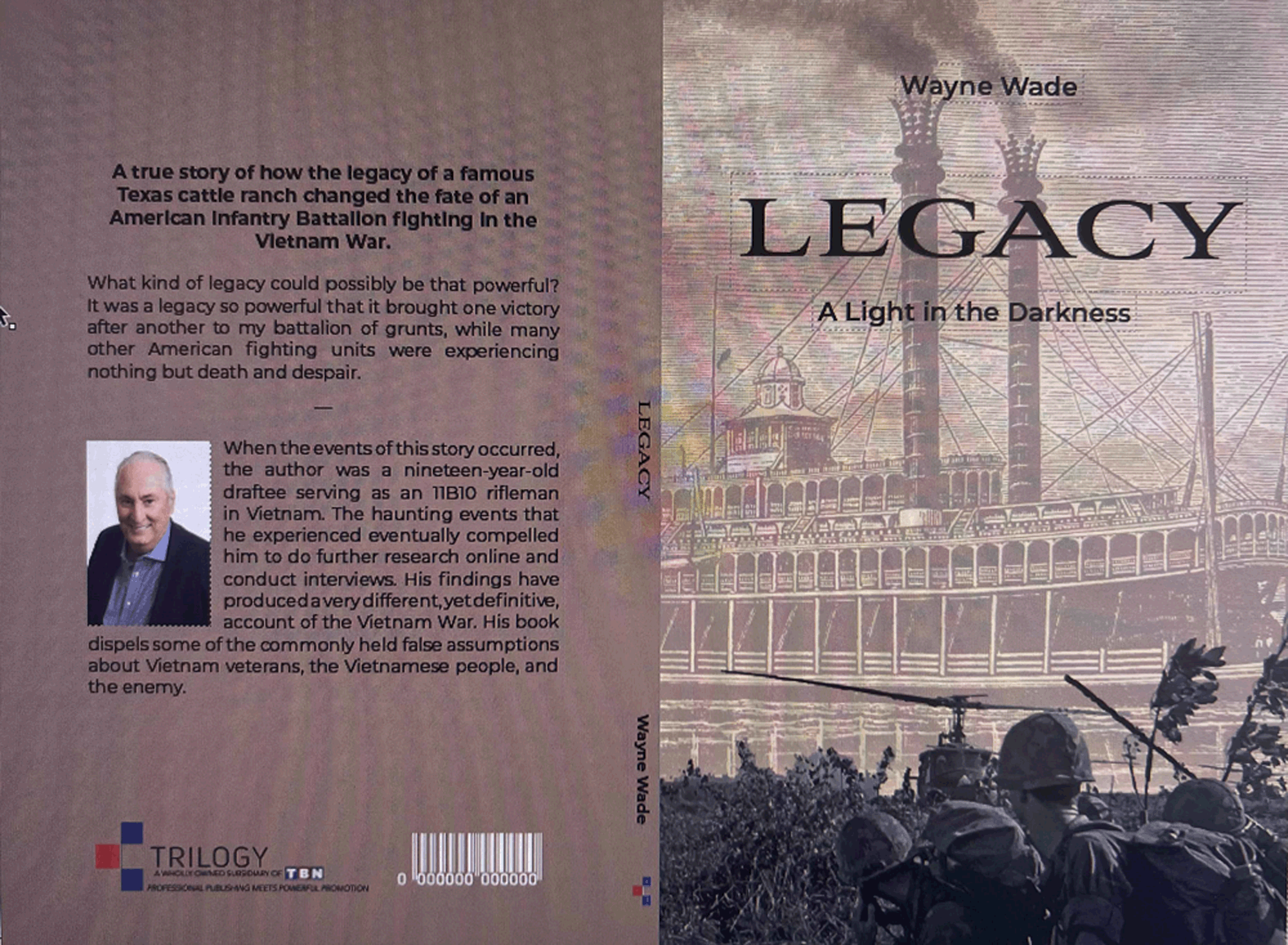
Vietnam memoir · King Ranch · 1st Infantry Division
A Light in the Darkness
An Old West legacy, a war story, and a legend, by Wayne Wade.
Paperback ISBN 979-8-89835-475-6 · Ebook ISBN 979-8-89835-476-3
Trilogy Christian Publishers · Released August 4, 2026
The author's note: I went to Vietnam in 1967 as a naive nineteen-year-old draftee in the 1st Infantry Division. Later, I began documenting my experiences serving in a combat unit. Those personal experiences were very different from the stories told by the media and other returning veterans. Curious, I began to research facts on the internet myself. My commander, then Lt. Col. Richard Cavazos, grew up on the King Ranch. Its co-founder, Henrietta King, greatly influenced ranch culture through her Christian faith. Young Richard grew up in that environment, while more and more of our future leaders grew up in a much more godless America. I believe that Christian environment helped Richard become one of the greatest military leaders in our nation's history. Under Richard's short but strong leadership, my battalion won nine major battles with very few losses. Seven years of research and numerous veteran interviews brought into focus a much broader picture of our nation's failings than I ever expected. In the book, I explain what we must do to prevent future catastrophic failures, not in a distant land, but within our own shores. The answer is the same as it is now. I spell that answer out in my book. However, simply put. America, turn back to the God described in the Bible.
The opening line of the story is the search phrase this page is built around: I would have died as a nineteen-year-old grunt in 1967 Vietnam had it not been for my connection to the Old West Legacy of the King Ranch.
An intimate character analysis of Richard and Henrietta King and how they came together to build a lifegiving legacy that saved the lives of my Dogface battalion over a hundred years later.
Wayne's first deadly experience in combat and his first encounter with the voice of the Holy Spirit, Who's warning saved him and his buddies from instant death.
Thoughtful insight into the mind of a great American leader, as his Blue Spaders fought along side our Dogface battalion, in operation Junction City.
My definition of, and reasons why, Little Man Syndrome is so detrimental to any organization, but especially the military.
A powerful testimony that shows, beyond a shadow of a doubt, the importance of listening to and obeying the Holy Spirit.
A thoughtful explanation, taken from the facts, and Wayne's combat experience, for why this diaster happened to the Black Lions and not my Dogface Battalion.
One grunt's feelings while returning to his combat unit after a heavenly getaway in Australia.
Insights into the mind of one communist commander as never before revealed.
This book is for readers searching for a truthful understanding of why we lost the Vietnam War. That reason is not hard to know. As a nation, we have stopped trusting God. Any nation that stops trusting God quickly becomes blind to the truth. My book explains the core elements of God's truth and how a not-so-God-fearing man applied the truths he learned growing up on the King Ranch to bring victory after victory to our Dogface battalion. However, one battalion alone cannot win wars. Without God's truth, a nation loses all perspective. The Vietnamese people were not our enemy. The godless communist ideology was our enemy in Vietnam, and it is still our enemy today. Since the end of the Second World War, the real enemy of our free way of life is not a nation, but the communist ideology and its second cousin, Islam.